
| Project Showcases |
| |
Community Development
(Benin) |
|
| |
|
| A highly successful innovative community development programme that focused on empowering local villages through financing social and economic development; the truly audacious methodology was to the benefit of a total of 62 villages identified in two very different rural and economically active regions (Atacora and West Borgou). |
| |
 |
Policy Development
(Nepal) |
| |
|
| A National Policy discussion on ICT Strategy was initiated between the Government, Academia, Private Sector, NGOs community, Civil Society and a number of other key national counterparts. Through a series of workshops and seminars a cross sectional long-term policy and strategy was developed and adopted. |
| |
Project Management
(Ethiopia) |
|
| |
|
| The Rural Development Project in Arsi & Bale zones was a challenging blend of construction projects (roads, water supply, etc) and assistance to local ‘woredas’ (communities) in rather difficult physical and institutional environments. Through successive yearly Management Services Agreements between the project partners, it became a showcase for all involved, and resulted in a second financing phase by the Donor. |
| |
 |
Urban & Rural Development
(Haiti) |
| |
|
Upgrading proposals for six poor neighbourhoods in Port-au-Prince’s largest slums and squatter area (population over 150,000). The Master Plan was prepared on the basis of numerous meetings with the several responsible ministries, daily site visits and frequent consultations with strong local community groups. Among a total of 40 complementary projects identified, over 30 received successful financing within less than 24 months. |
|
“Unusual” Architectural Design
(USA) |
 |
| |
| An avid collector of "good old things" wanted to have all of them used in the design of his family home downtown Newport (Rhode Island). This main requirement combined with an existing colonial structure amidst several abandoned but sound foundation walls in situ became the seed of the design principle. The final design is an intriguing "collage" of various American artifacts. A bit like having a permanent museum exhibit in one’s own house... |
| |
 |
Garrisoning Formulation Mission
(Congo – DRC) |
| |
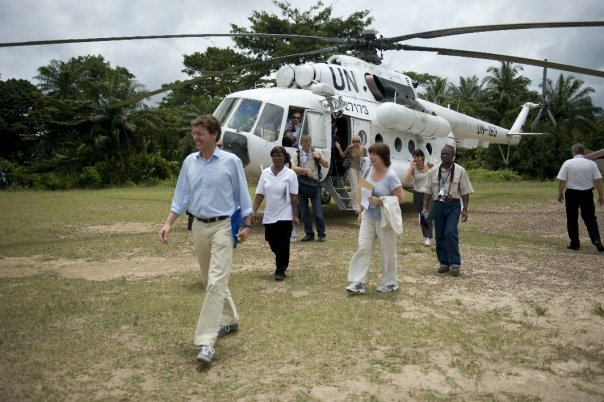
| Assistance to DFID included strong collaboration with MONUC, FARDC, IOM and several Congolese partners, notably the Ministry of Defense (MDNAC) and the Ministry of Public Works (MTPI). Formulation of a comprehensive program for the military and their families, to be implemented over a 20 year-period in the context of the Army Reform Plan (PRA). Potential sites identification, consultations with local civil and military authorities, evaluation of various scenarios and their costs resulted in (i) a country-wide Infrastructure Development Plan and (ii) a first stage project to fully develop 3 sites in Ituri (Djugu) and North Kivu (Mambango, Rumangabo). The plan evaluated the scale of the required investment, based on a typical camp “module” tailored for a battalion of 944 men and their families (totaling about 6,000 people). |
| |
Residential / Commercial Building
(Congo - DRC) |
 |
| |
| An income-generating mixed-use building comprising smart studio apartments, 1BR apartments and ground-floor office space on a semi-urban parcel located in the western suburbs of the capital, Kinshasa. Privacy and security concerns were a priority, as well as making the most of all existing restraining municipal conditions (right-of-way, utilities, etc). The final design includes a total of 13 apartments and 3 commercial spaces, as well as private parking facilities. |
| |
 |
Infrastructures Construction Monitoring
(Burundi) |
| |
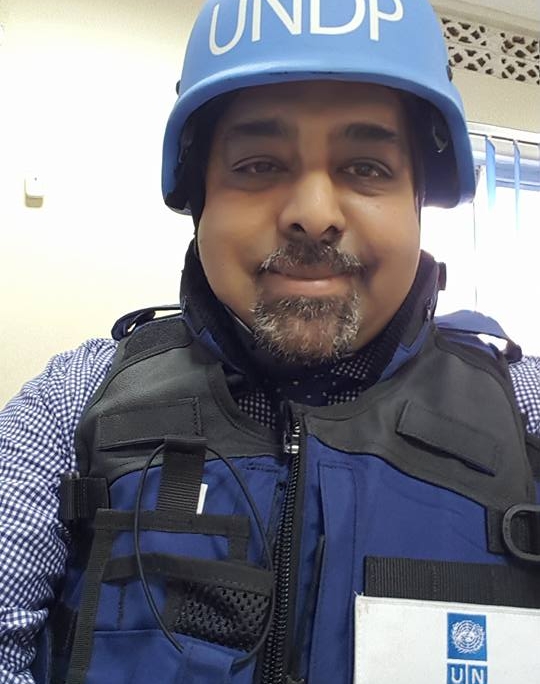
| Through a series of 8 missions, HARMONIS assisted UNDP / Bujumbura technically and managerially in the implementation of a major construction program that included 42 primary schools, 18 regional courts, 1200 units of social housing for refugees, and the rehabilitation of 11 jails and 14 military camps. All activities were done in the framework of the Emergency Trust Fund and the Peace Building Fund. Site inspections and recommendations were made to provide counsel to both local contractors and the UNDP administration. Final acceptance of works was pronounced in 2009. |
| |
Sustainable & Affordable low-cost Housing
(Haiti) |
 |
| |
| In response to a Call from HABITAT HAITI / AIA (NY Chapter) for a collaborative design, HARMONIS proposal used a modular system offering multiple options of expansion, complemented by a sanitation system proven to be efficient and sustainable, and addressed the Haitian rural family’s needs and ways of life. A straightforward, practical approach with emphasis on recycling and minimal environmental impact (collection of rainwater for general domestic use, collection of storm water for subsistence gardening (tomatoes, cassava, cabbage, banana/mango tree, etc). The design was based on a cluster of 8 families (individual parcels of ± 400m2 giving space for privacy, room to expand) which allowed for additional investments over time (maximum floor area of 120 m2 (±1320 sq.ft) as family grows/income increases, each family having individual toilet, shower and washbasin. |
| |
 |
Tele-Geo-Techniques for Urban Development
(Niger) |
| |
| Proposal aimed to provide answers to practical needs regarding urban planning for regional African cities ranging from 25,000 to 50,000 inhabitants, using the city of Dogondoutchi as a model. The availability of aerial photos taken in 1955, 1975 and 2002 (covering a span of some 47 years) was instrumental in studying and understanding how the city slowly grew the way it did. This led to the completion of a comprehensive urban development scheme that optimized the harmonization process between parcels, main roadways and natural features. |
| |
Sustainable hydro-agricultural Regional planning
(Mali) |
 |
| |
| Partnership proposal to have CRESI/France, the Douentza Council, UNDP/Bamako, the Nigerian NGO R.A.I.L and HARMONIS join their expertise for a 3-year intervention in the Circle of Douentza. It aimed to (i) create a regional technical entity carrying out studies and supervising actual works, (ii) identify regional priority actions to be launched and completed during the next 10 years, and (iii) ensure that local urban and pastoral domains be developed respecting key environmental rules and principles. Physical and administrative actions were to be formalized for the urban, agricultural, pastoral and forestry domains, including training of the local staff. |